
If you’re looking at a new front door, you’ve probably seen “composite” and “uPVC” mentioned almost as if they mean the same thing. They don’t. The door you choose affects how your home looks from the street, what you pay, and how long it lasts before you’re doing this again.
Here’s what actually separates the two, and how to work out which one suits your home.
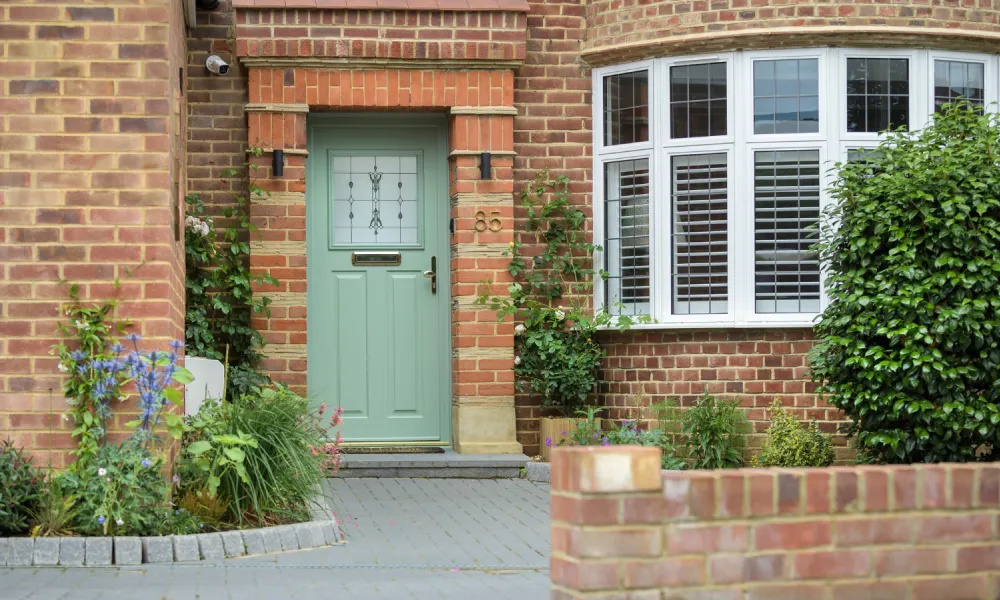
What is a composite door?
A composite door is a single, solid slab, built from several layers pressed together and wrapped in a tough, moulded outer skin, then hung in its own frame with a threshold underneath.
That’s what gives it the weight and the look of a painted wooden door, without actually being one.
We fit the Solidor range and our own Universal composite range, both available in a wide choice of colours inside and out, so the door can match your hallway as well as your street.
We don’t fit timber front doors, but a composite door in a heritage colour gives you that same painted-wood look, and you’ll never need to repaint it.
Did you know?
Lock snapping is behind a large share of UK break-ins, which is why an anti-snap cylinder is one of the cheapest security upgrades you can make on either a composite or a uPVC door.
What is a uPVC panel door?
uPVC doors come in two main styles.
A full panel door has decorative panelling instead of glass, giving you privacy and a defined look with no glazing at all. A half panel door, sometimes called a midrail door, splits the design: a solid panel below and glazing above, so you get some natural light while keeping privacy at eye level.
Built from the same multi-chambered profile as uPVC windows, these doors are light and easy to open, ideal for anyone who wants a door that’s simple to live with day to day.
How do they compare on looks?
This is where the two types part company most clearly.
With a uPVC door even the best mouldings have a flatter, more uniform look than real joinery, and you can often see a thin line where the panel meets the frame around it. A composite door avoids that problem because the whole face is one continuous skin, moulded with deep grain and shadow lines that catch the light properly.
If you want a front door that genuinely passes for painted timber from the pavement, composite gets you there. A panelled uPVC door is still a good-looking, practical option if that level of detail matters less to you.
How do they compare on price?
A uPVC panel door will cost less to buy and fit than a composite door, generally somewhere between £600 and £1,000 fitted. That makes it a sensible choice for a back door, a side entrance, or anywhere the budget matters more than how the door looks from the street.
By comparison, a composite door costs more upfront, usually £1,200 to £2,000 fitted, but it’s built to last two to three decades without fading, cracking or needing repainting. That extra cost tends to even out over the years you own it, especially on a front door, which takes the most sun and the most day-to-day wear.
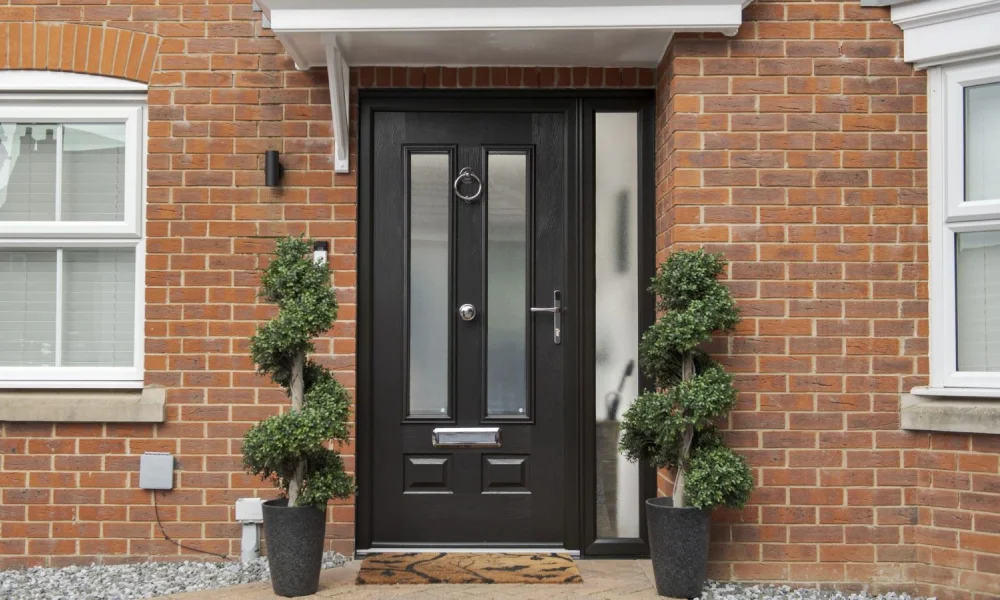
Which door is the most secure?
Composite doors have the edge here.
They are heavier and built as a single, solid slab, so there is simply more material between an intruder and your hallway than a uPVC panel door offers, and composite doors comfortably clear the security standard used for new-build front doors.
uPVC doors are still a sound choice for security, especially with a well-fitted multi-point lock, but the infill panel is built to a lighter spec than the rest of the frame. That matters most on a secluded side or back door, less so on a front door in full view of the street.
Whichever material you choose, ask about the cylinder in the lock. A cylinder built to resist snapping closes off one of the more common ways a front door lock gets forced, and it is a small, inexpensive upgrade on either a composite or a uPVC door.
Locks have moved on too
Multi-point locking doors used to mean a lever handle you had to lift every time you came in or went out.
On a composite door, you can now have a traditional latch-style lock instead, the sort you would recognise from a classic front door, operated by a simple thumb-turn from the inside. Pull the door shut and the multi-point lock engages on its own, securing the door into the frame at several points without you touching a handle at all.
It is a small change, but it means a composite door can have the security of a modern multi-point system with the look and feel of a traditional one.
Which door is right for you?
Every door we fit, whichever material you choose, meets the current Building Regulations minimum for keeping the heat in, and a composite door usually goes well beyond it on security too.
Composite suits the front of the house best, where the finish and the security matter most. For a back door, a utility entrance, or anywhere practicality comes first, a uPVC panel door is a straightforward, cost-effective choice.
If you’re still weighing it up, come and see both ranges side by side at our showroom in Watford, or give us a call on (020) 8868 1133 and we’ll talk you through the options. No pressure, no hard sell, just honest advice.